

Amarillo, Texas, is characterized by a semi-arid climate, with hot summers and cold winters. Average high temperatures during summer range from the mid-80s to low 90s, while winter lows can drop into the 20s and 30s. The area receives approximately 21 inches of rain annually, with about 259 sunny days each year. This climate presents unique challenges and opportunities for local gardeners.
Understanding Amarillo’s Climate
Amarillo’s climate is classified as semi-arid, with hot summers and cold winters. Average high temperatures during summer range from the mid-80s to low 90s, while winter lows can drop into the 20s and 30s. The area receives approximately 21 inches of rain annually, with about 259 sunny days each year. This climate presents unique challenges and opportunities for local gardeners.
Benefits of Native Plants
Incorporating native plants into your landscape offers several advantages:
- Water Efficiency: Once established, native plants require minimal supplemental irrigation, as they are adapted to Amarillo’s natural rainfall patterns and seasonal dry spells.
- Wildlife Support: Native plants provide essential habitat and food sources for local wildlife, including pollinators like bees and butterflies, as well as songbirds.
- Low Maintenance: These plants are well-suited to the local soil and climate conditions, reducing the need for fertilizers and pesticides.
Top Native Plants for Amarillo Gardens
Consider incorporating the following native species into your garden:
Perennials
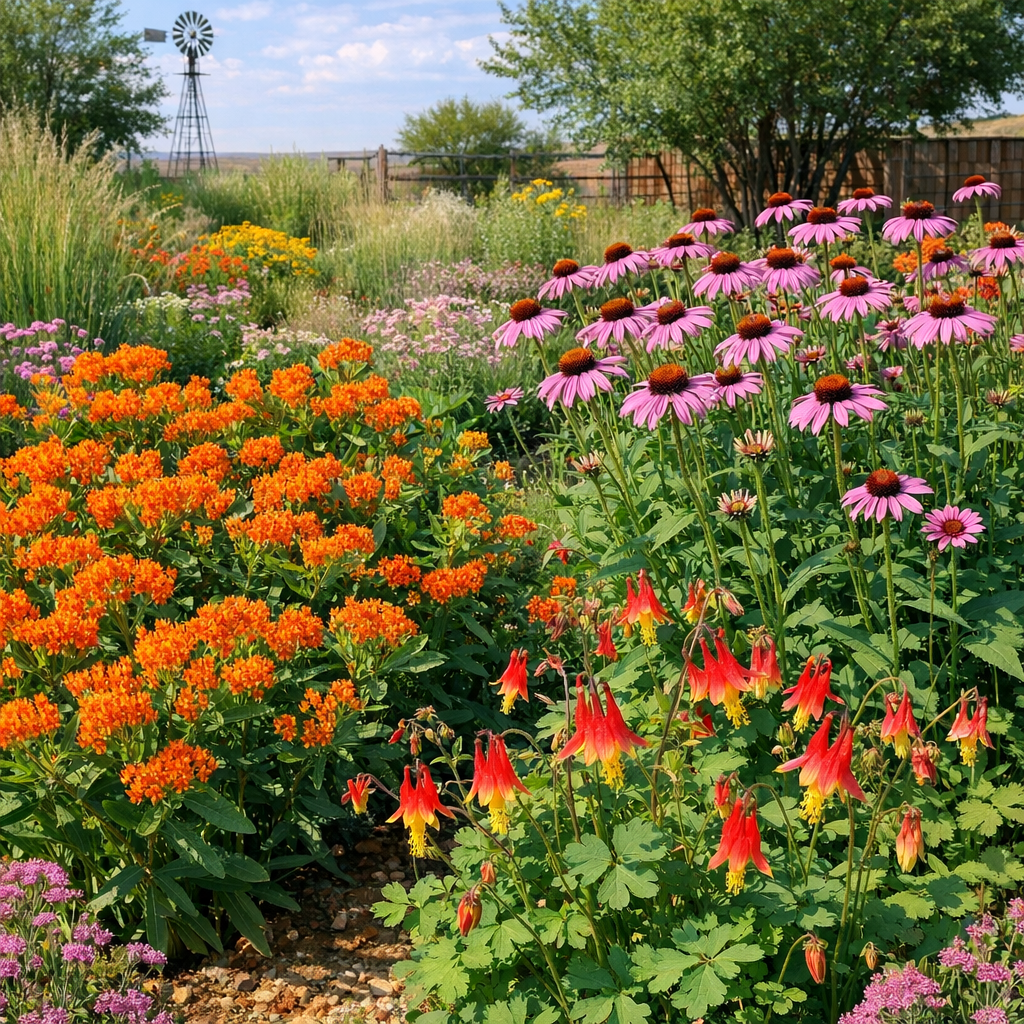
- Butterfly Weed (Asclepias tuberosa): This vibrant orange-flowered plant attracts monarch butterflies and thrives in full sun.
- Purple Coneflower (Echinacea purpurea): Known for its striking purple petals, it supports various pollinators and is drought-tolerant.
- Wild Columbine (Aquilegia canadensis): With its unique red and yellow flowers, it flourishes in partial shade and attracts hummingbirds.
Shrubs
- Flame Azalea (Rhododendron calendulaceum): This native azalea offers stunning orange blooms and supports local wildlife.
- American Beautyberry (Callicarpa americana): Recognized by its bright purple berries, it provides food for birds and adds visual interest.
Groundcovers
- Green-and-Gold (Chrysogonum virginianum): A low-growing plant with yellow flowers that blooms from spring through fall, suitable for both sun and shade.
- Wild Ginger (Asarum canadense): Features heart-shaped leaves and thrives in dense shade, making it ideal for under trees.
Establishing Your Native Garden
Creating a native plant garden is a rewarding process that unfolds over several years:
Year 1: Planting
- Water weekly during dry spells to help plants establish roots.
- Avoid over-watering and fertilizing; native plants thrive in local soil conditions.
- Mulch with shredded leaves to retain moisture and suppress weeds.
Year 2: Establishment
- Water only during extended droughts (three weeks or more without rain).
- Expect increased flowering and some self-seeding as plants become more established.
Year 3 and Beyond: Self-Sufficiency
- Native plants should require no supplemental watering, except in extreme drought conditions.
- Enjoy full blooms and increased wildlife activity, as your garden becomes a thriving ecosystem.
Soil Considerations
Most native plants prefer well-drained soil and are adapted to nutrient-poor conditions. Avoid using fertilizers, as they can lead to excessive, weak growth. Instead, focus on selecting plants suited to your specific soil type and garden conditions.
Where to Find Native Plants
To source native plants for your garden, consider the following resources:
- Local native plant nurseries in the Amarillo area.
- Texas Native Plant Society plant sales, typically held in spring and fall.
- Online databases such as the Lady Bird Johnson Wildflower Center (wildflower.org) and the Audubon Native Plant Finder (audubon.org/native-plants).
By embracing Amarillo’s unique climate and incorporating native plants into your landscape, you can create a beautiful, sustainable garden that supports local wildlife and thrives with minimal maintenance.